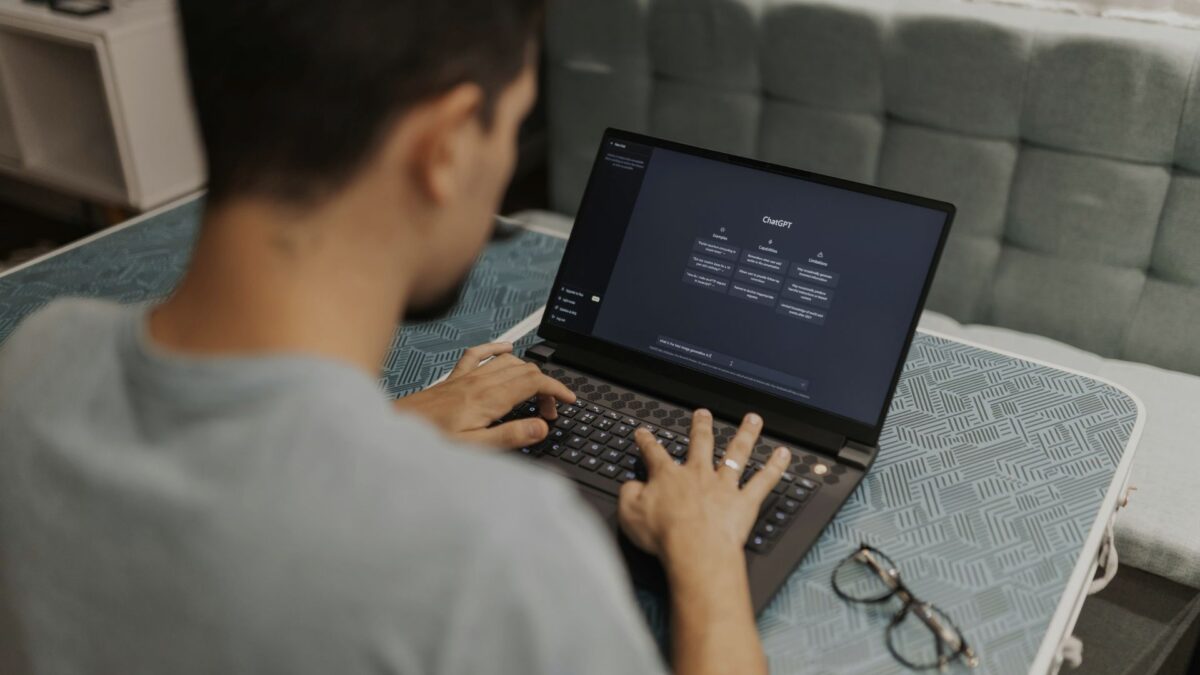
Employees are secretly recording disciplinary and grievance meetings, then feeding the transcript into AI to build a case overnight. Most businesses have no policy covering either. Here’s what you need to know.
It’s a scenario that’s becoming more common than most employers realise.
A disciplinary meeting takes place. The manager is nervous, says something slightly clumsy under pressure. The meeting ends. That evening, the employee opens their phone, uploads the recording to an AI transcription tool, pastes the transcript into ChatGPT, and types: ‘Do I have a case?’
By the following morning, they have a detailed response telling them exactly what their rights are, and possibly a draft grievance to go with it.
Welcome to the new reality of workplace disputes.
Can employees legally record meetings?
This is where many employers assume they’re on safe ground. They’re not.
An employee who records their own disciplinary or grievance meeting will not normally commit a criminal offence simply by pressing record on their phone. That is the legal reality in the UK.
The recording may breach your workplace policies, and it may undermine trust and confidence, but that doesn’t make it inadmissible. Employment tribunals regularly admit covert recordings as evidence, even where they were obtained without the employer’s knowledge or consent.
Punjab National Bank v Gosain: An Employment Appeal Tribunal decision confirmed that secretly-recorded grievance and disciplinary meetings could be admissible as evidence — including a recording made while the employee was out of the room and managers were discussing the matter privately. Employers should assume that anything said in a meeting may one day be played back in a tribunal.
The position can change if the employee shares the recording more widely, posting it online, forwarding it to third parties, or using it beyond their own record-keeping. That can engage data protection obligations and confidentiality duties. But simply making the recording? In most cases, that’s not something you can prevent.
The AI layer that changes everything
Covert recordings have been around for as long as smartphones. What’s new is what employees can now do with them.
AI transcription tools can turn a one-hour recording into a searchable, formatted document in minutes. That transcript can then be fed into ChatGPT with a simple prompt, and the employee receives back a detailed breakdown of potential claims, suggested next steps, and in some cases, a drafted grievance letter.
The speed and accessibility of this changes the dynamic of workplace disputes significantly. What would previously have required a visit to a solicitor, or a union rep, or at least several days of research can now happen in an evening, and the output looks authoritative, even when it isn’t.
There’s a further wrinkle. Some employees are now using the AI transcription tools built into platforms like Microsoft Teams or Otter.ai, which raises its own set of data protection questions that neither party has fully thought through.
There’s a risk on your side too
Here’s the part many employers haven’t considered.
HR professionals are increasingly using AI notetaking tools to transcribe disciplinary and grievance meetings themselves, removing the need for a manual notetaker and producing a faster, cleaner record. On the surface, this seems sensible.
But employment law experts have flagged that the terms and conditions of many of these tools are poorly understood by the organisations using them. Sensitive personal data, details of health conditions, performance issues, personal disclosures, is being fed into AI systems without full consideration of GDPR compliance.
And AI notetakers don’t capture everything a human does. A skilled notetaker records tone, raised voices, emotional responses, moments of distress. An AI transcription tool records words. In a tribunal, that distinction can matter enormously.
What you should do now
Start every meeting with a clear statement
At the outset of any disciplinary or grievance meeting, state clearly whether the meeting is or is not being recorded, and ask the employee to confirm whether they are also recording or not recording the meeting.
If you are not recording, note this in your written record and ask the employee to confirm they are also not recording the meeting It doesn’t prevent covert recording, but it documents your position and creates a clear expectation.
Update your policies
Your disciplinary and grievance policy should explicitly address recording. It should make clear that recording meetings without consent is prohibited, and that doing so may itself constitute a disciplinary matter. If your handbook predates the smartphone era, it almost certainly needs updating.
Train your managers to manage their words
The covert recording risk is highest in informal conversations and unscripted moments. Managers who are well-prepared, who follow a clear process, and who understand what not to say are significantly lower risk. Training doesn’t need to be lengthy, but it needs to happen before the meeting, not after.
Be careful with AI notetaking tools
If you’re using AI transcription in HR meetings, check the terms and conditions carefully. Understand where that data is stored, how long it is retained, and whether it could be accessed by the tool provider. If you’re not sure, don’t use it for sensitive meetings until you are.
The bottom line
The best protection against a covert recording being used against you in a tribunal is running a fair, well-documented process in the first place. If everything said in that meeting was reasonable, proportionate, and consistent with your policies, a recording becomes far less of a threat.
But most businesses aren’t there yet, and the gap between where they are and where they need to be is widening as AI makes it easier for employees to act on what they capture.
If you’d like us to review your disciplinary and grievance policies, or talk through a specific situation, get in touch.
Want to review your policies?
We’ll help you make sure your disciplinary and grievance procedures are fit for the AI age: clear, fair, and legally robust. Speak to our team today or book a free HR consultation here.

Holly Mapstone is an HR expert and specialises in helping those of you in the SME sector with all of your HR needs.
Consultancy allows Holly to be agile and to adapt her style and support to suit the needs of her clients. Building strong working relationships allows Holly to deliver improvements, while also aligning people strategy to business outcomes and promoting resilient and positive cultures.
This article is intended as general guidance and does not constitute legal advice. Every situation is different, if you need advice specific to your circumstances, please get in touch.